
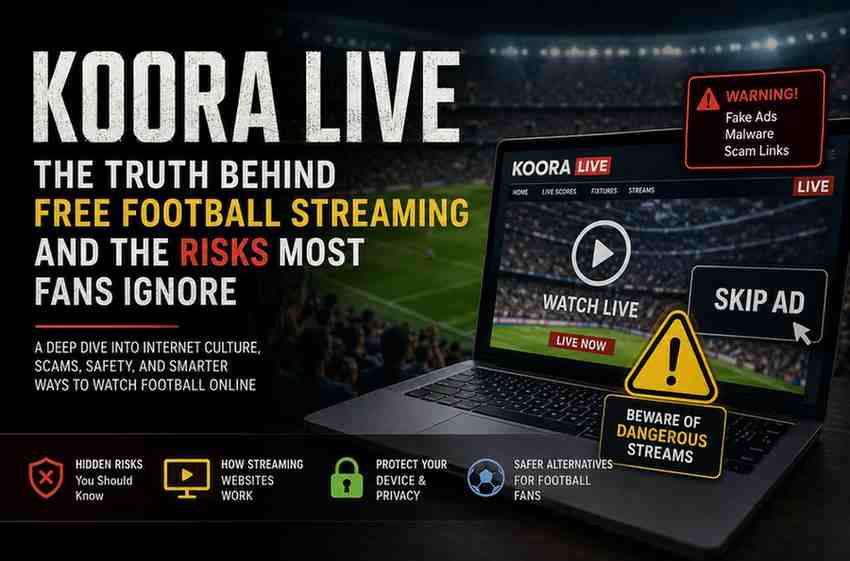
There’s a moment before every big football match when the internet becomes slightly irrational. You can almost feel it happening in real time. Group chats suddenly wake up. Twitter timelines move faster. Someone starts asking for links. Another person says the stream is lagging already. Tabs begin multiplying across browsers like people are preparing for a digital emergency instead of a football match.
And somewhere inside that chaos, millions of users type the same words into Google:
Koora Live.
Not because they fully trust the websites behind those search results. Most people already expect popup ads, redirects, fake play buttons, and unstable streams. That’s the strange part. The internet experience around football streaming became so frustrating for so long that many users now treat inconvenience itself as normal.
That is what makes the Koora Live phenomenon far more interesting than a simple “free football streaming” topic. It reveals something bigger about how people behave online when emotion becomes urgent. Because modern streaming culture no longer rewards trust. It rewards speed.
The average user searching for a football stream five minutes before kickoff is not carefully evaluating domain safety, privacy permissions, or browser risks. They are evaluating one thing only:
“Will this stream load before the match starts?”
That shift changes internet behavior completely.
Koora Live Is No Longer Just a Website
One of the biggest misunderstandings around Koora Live is thinking it refers to one stable platform. It doesn’t anymore. The term now behaves more like an internet category attached to dozens, sometimes hundreds, of:
- streaming mirrors
- football score pages
- cloned domains
- embedded video platforms
- match update sites
Some pages only provide live scores and commentary. Others attempt to stream football matches through unofficial or third-party systems. Then there are the websites existing almost entirely to monetize football traffic through ads, redirects, betting partnerships, or aggressive browser notifications.
For most users, all of these experiences blur together into one thing:
“the place where I try to watch football online.”
That’s why keywords like:
- koora live
- koora live score
- koora on live tv
- koora li
continue generating enormous search traffic despite years of warnings around scam websites and unsafe streaming platforms. What keeps these searches alive is not trust. It’s urgency.
Football Changes How People Behave Online
Under normal circumstances, most users would instantly leave a website overloaded with suspicious redirects and fake buttons. Football changes that behavior because live sports create emotional deadlines.
The closer kickoff gets, the worse online decision-making becomes. That sounds harsh, but it’s true. Fans stop evaluating websites carefully and start prioritizing immediacy over trust, stability, or privacy. If a stream loads quickly enough, people tolerate behavior they would reject everywhere else online. One of the strangest parts of football streaming culture is how quickly users normalize bad internet experiences.
Think about it:
- endless popups
- autoplay gambling ads
- fake virus warnings
- tabs opening automatically
- browser notifications asking for permissions immediately
In almost any other situation, users would close the page instantly. But before a football match, many people simply keep clicking until the stream works. Over time, inconvenience itself becomes normalized. Users no longer expect unofficial streaming websites to feel trustworthy. They expect instability as part of the exchange for free access. That normalization is one of the most overlooked realities of modern internet culture.
Why Millions Still Search Koora Live
Most explanations around unofficial football streaming completely misunderstand the emotional side of the issue. People often frame users as careless or irresponsible, but the reality is more complicated. Football broadcasting today has become financially exhausting. A fan trying to follow Premier League, Champions League, international football, and domestic competitions can easily end up needing multiple subscriptions across different platforms just to keep up consistently.
For many users globally, especially younger audiences and mobile-first users, that system simply does not feel realistic anymore. This is where Koora-style streaming culture survives.
Not necessarily because people love unofficial websites, but because many users feel trapped between:
- expensive subscriptions
- regional restrictions
- fragmented apps
- limited access
- emotional attachment to live football
That emotional attachment matters more than most people realize.
Football is no longer something users quietly watch alone on television. Matches now unfold simultaneously across:
- WhatsApp groups
- Twitter reactions
- Instagram clips
- TikTok edits
- live memes
- Discord conversations
Missing a major goal today feels socially different because the internet reacts instantly. A match is no longer just a sporting event. It becomes a shared online moment people feel pressured to experience live. That pressure drives urgency. And urgency drives searches.
The Internet Now Runs on Urgency
Koora Live is not really the story. Urgency is the story. Modern internet behavior increasingly rewards immediacy over caution. Users move faster, scroll faster, click faster, and evaluate less carefully than they did years ago. This becomes even more obvious on mobile devices. Mobile-first users often search, click, and stream within seconds. They are not carefully checking domains or researching website ownership. Instead, they react quickly and emotionally because the match is about to start.
That behavior creates the perfect environment for clone websites and aggressive monetization systems to thrive. Clone streaming websites survive because users rarely build loyalty toward one domain. Most people simply search the same keyword repeatedly and click whichever result appears first before kickoff. This creates a temporary internet economy built entirely around emotional deadlines. And temporary systems rarely prioritize trust.
The Business Behind Free Football Streaming
One of the biggest myths around free streaming culture is the idea that these websites somehow operate without serious monetization systems. Football traffic is incredibly valuable online.
Large matches generate massive spikes in search activity within short periods of time. Streaming websites monetize that urgency aggressively through:
- advertising systems
- betting partnerships
- affiliate redirects
- browser notifications
- traffic reselling
- tracking systems
In many cases, the stream itself is not even the real business. The real business is attention. That explains why some streaming pages feel intentionally chaotic. Users often think excessive ads are accidental design problems when, in reality, confusion itself can increase clicks and monetization opportunities.
Some websites push this further by using fake “HD player” downloads or suspicious APK files targeted toward Android users. Others rely heavily on browser notification traps that continue sending spam or promotional content long after the user leaves the site. The ecosystem survives because urgency consistently outweighs caution.
Real Case Study: What Happens During Major Football Tournaments
Cybersecurity researchers regularly observe spikes in malicious streaming activity during events like:
- FIFA World Cup
- UEFA Champions League finals
- major derby matches
- international tournaments
One common pattern repeatedly appears.
Users searching for streams shortly before kickoff land on websites asking them to:
“Allow notifications to continue watching.”
Most users click quickly because they are rushing.
Afterward, browsers begin receiving:
- fake antivirus alerts
- gambling advertisements
- suspicious crypto promotions
- misleading software downloads
sometimes for weeks.
The effectiveness of these campaigns has less to do with technical sophistication and more to do with psychology. Football fans under emotional time pressure become far more likely to ignore warning signs they would normally notice.
That’s what makes the Koora Live ecosystem psychologically interesting. It’s not only about streaming. It’s about how emotional urgency changes digital behavior itself.
Digital Survival Behavior Among Football Fans
Experienced stream users often develop strange internet survival habits without consciously realizing it.
They learn to:
- close redirects automatically
- recognize fake play buttons
- avoid suspicious downloads instinctively
- refresh broken streams repeatedly
- ignore obvious spam ads
Over time, users adapt to chaotic online environments instead of questioning why those environments exist in the first place.
That adaptation says a lot about the modern internet.
People are becoming increasingly comfortable operating inside unstable digital experiences as long as access remains immediate.
Warning Signs Users Should Never Ignore
Even experienced users should immediately avoid streaming pages that:
- force APK downloads
- request strange permissions
- overload browsers with redirects
- display fake virus warnings
- ask for notification access instantly
- flood pages with betting ads
- trigger automatic downloads
A football stream should never require sacrificing personal security or device safety.
| Warning Sign | Possible Risk |
|---|---|
| Fake play buttons | Redirect scams |
| APK downloads | Malware installation |
| Endless popups | Aggressive ad systems |
| Notification traps | Spam campaigns |
| Strange domains | Clone scam websites |
Why This Topic Is Bigger Than Football
The Koora Live phenomenon reveals something much larger about the internet itself.
When official systems become:
- expensive
- fragmented
- inconvenient
- region-locked
alternative ecosystems appear naturally.
This pattern exists everywhere online:
- movies
- software
- music
- sports streaming
Football simply became one of the clearest examples because live matches create emotional urgency stronger than most other forms of entertainment. That urgency changes behavior. And once enough users normalize unstable online experiences, entire internet economies form around exploiting that normalization.
FAQs
What is Koora Live?
Is Koora Live safe?
Why do people keep searching Koora Live?
Can streaming websites infect devices?
Why are there so many clone streaming websites?
Conclusion
The most interesting thing about Koora Live is that it was never really just about football streaming. It became a reflection of how modern internet behavior works under emotional pressure.
Millions of users already know unofficial streaming websites can feel unstable, overloaded with ads, or filled with suspicious redirects. Yet they continue searching because urgency changes priorities. People stop evaluating websites carefully once the match feels close enough to miss.
- That’s the real internet culture built around football streaming:
- not trust,
- not loyalty,
- not stability,
- but immediacy.
And maybe that is the biggest warning hidden inside the entire Koora Live phenomenon.
