
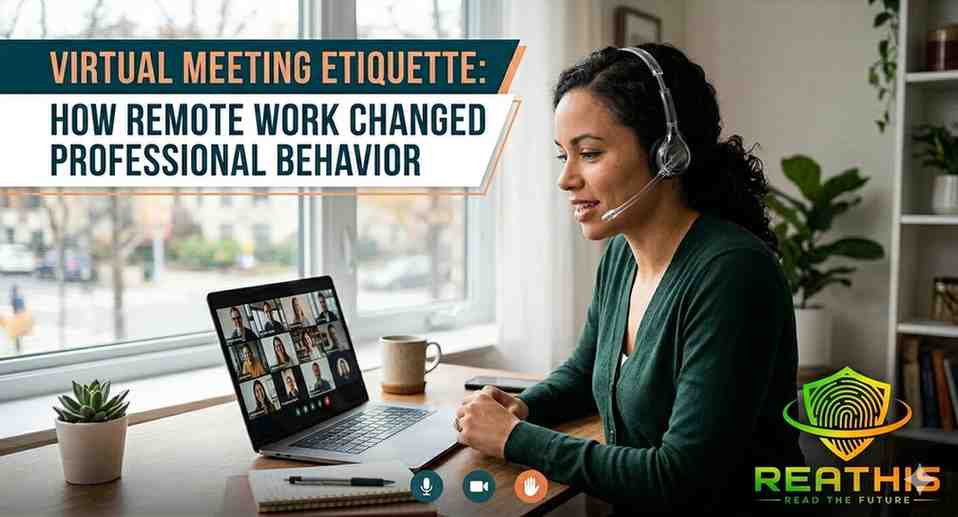
Most people discover how performative work has become the moment they realize they’re being judged by the corner of their webcam. That tiny frame — a slice of a kitchen, a carefully chosen bookshelf, a permanently strained smile — has quietly reshaped how people show up, listen, communicate, and even build reputations at work, which is exactly why virtual meeting etiquette has become one of the most important professional skills in modern remote workplaces.
The shift toward remote work did not simply change where meetings happen. It changed the social architecture of professional life itself. Conversations that once unfolded naturally in hallways, cafeterias, and meeting rooms are now filtered through microphones, unstable internet connections, muted reactions, and the silent pressure of digital visibility. What began as a temporary adaptation during the pandemic slowly evolved into an entirely new workplace grammar where professionalism became deeply connected to online presence.
That is why virtual meeting etiquette is no longer just about muting microphones or turning cameras on. It is about trust, attention, emotional energy, communication clarity, and the invisible rules shaping remote work culture.
And most companies are still learning those rules in real time.
Why Virtual Meetings Feel More Exhausting Than Offices Ever Did
Remote work promised flexibility, efficiency, and freedom from unnecessary office routines. In many ways, it delivered exactly that. But it also introduced a new kind of exhaustion that traditional workplaces rarely created at this scale.
The fatigue most people describe after long video calls is not simply tiredness. It is cognitive overload. In physical spaces, communication flows naturally through posture, eye contact, small gestures, pauses, and environmental awareness. Virtual meetings flatten those signals into small digital windows that force the brain to work harder to interpret meaning.
People constantly monitor:
- their appearance
- background environment
- microphone quality
- facial expressions
- internet stability
- perceived attentiveness
That ongoing self-awareness quietly drains energy.
| Traditional Office Communication | Virtual Communication |
|---|---|
| Natural body language cues | Limited visual signals |
| Informal conversations | Scheduled interactions |
| Less self-monitoring | Constant self-monitoring |
| Physical presence builds trust | Digital visibility builds trust |
| Fewer screen-based interactions | Continuous screen exposure |
| Easier spontaneous collaboration | Tool-dependent collaboration |
The strange part is that many workers normalized this pressure without fully recognizing its psychological impact. Spending six hours a day staring at your own face while simultaneously trying to appear engaged is not a natural human experience. Yet for millions of professionals, it became routine almost overnight.
This is one reason why virtual meeting etiquette matters more today than most organizations realize. Without thoughtful communication norms, remote work slowly transforms into an exhausting cycle of constant performance.
How Remote Work Quietly Rewired Workplace Communication
One of the biggest cultural changes remote work introduced was the idea that visibility equals productivity.
In physical offices, managers could casually observe activity through movement, conversations, or presence. Remote environments replaced those informal observations with digital indicators:
- green status dots
- meeting attendance
- response times
- camera presence
- Slack activity
Over time, digital visibility itself became a form of workplace currency.
Employees learned to signal professionalism through:
- clean backgrounds
- deliberate muting
- active chat participation
- immediate responses
- carefully managed expressions
Even silence changed meaning online. A delayed reply that once felt normal in office environments suddenly appeared suspicious in remote settings where everyone seemed permanently reachable.
This rewiring created a subtle but powerful pressure to remain constantly available. The line between collaboration and surveillance became increasingly blurred. Quick check-ins expanded into calendar overload. Notifications invaded breaks. And the modern workday slowly became fragmented into endless small digital interactions competing for attention.
Virtual meeting etiquette emerged partly as a survival mechanism against this chaos. Teams needed systems to preserve focus, respect time, and reduce communication fatigue.
The Hidden Psychology of Being on Camera All Day
The psychology of video calls is more complicated than most organizations initially expected.
“Zoom fatigue” became a popular phrase, but the underlying issue runs deeper than screen exhaustion. Human communication evolved through dynamic physical interaction. Video calls compress those interactions into artificial spaces where people simultaneously communicate and observe themselves communicating.
That self-monitoring creates psychological strain.
Camera anxiety, for example, affects far more employees than managers often realize. Some workers feel intense pressure around appearance, environment, or constant visual exposure. Others experience stress because prolonged eye contact through video feels unnaturally intense compared to normal conversation dynamics.
At the same time, many employees quietly disengage during meetings while maintaining the appearance of participation. Cameras stay on while attention drifts toward emails, messages, or other tasks. This is not always laziness. Often it reflects cognitive overload from excessive meeting culture itself.
The result is a workplace environment where people are technically present but mentally fragmented.
And fragmentation slowly damages communication quality.
Why Virtual Meeting Etiquette Matters More Than Most Teams Realize
Many organizations mistakenly treat virtual meeting etiquette as a set of minor professional rules. In reality, etiquette functions as social infrastructure for distributed teams.
Good meeting norms reduce friction.
When meetings begin with:
- clear agendas
- defined outcomes
- time boundaries
- respectful facilitation
people experience less confusion and greater trust in the process.
Etiquette also protects inclusion. In hybrid workplaces, remote participants can easily become secondary voices if communication systems favor whoever is physically present in the room. Thoughtful facilitation ensures quieter employees, international teams, and remote workers remain part of important discussions.
But etiquette also affects reputation in ways many employees underestimate.
In remote workplaces:
- punctuality
- clarity
- listening behavior
- concise follow-ups
- respectful participation
become highly visible indicators of professionalism.
Online behavior increasingly shapes career perception because virtual environments amplify communication patterns more than physical offices ever did.
The Remote Work Problems Nobody Talks About Publicly
Most articles about virtual meeting etiquette focus on obvious advice like muting microphones or avoiding interruptions. But the deeper problems are cultural and psychological.
People often pretend to pay attention.
Notifications silently pull focus away from discussions. Meetings become background noise while employees multitask through emails or unrelated work. Cameras remain on while attention disappears completely.
This creates a strange social performance where participation becomes partially symbolic.
At the same time, remote meetings reduce spontaneous interaction. Quick hallway mentorship, casual brainstorming, and unstructured conversations become harder to recreate digitally. Teams communicate more frequently yet often feel less connected.
Other hidden problems include:
- awkward pauses caused by audio delay
- talking over others unintentionally
- meeting overload reducing deep work
- constant context switching
- emotional burnout from endless calls
Over time, organizations risk creating cultures optimized for responsiveness rather than thoughtful work.
That distinction matters more than many companies realize.
AI Meeting Assistants Are Changing Workplace Etiquette Again
The rise of AI meeting assistants introduced another major shift in workplace communication.
Tools that automatically:
- record meetings
- generate summaries
- create action items
- transcribe discussions
- promise efficiency and reduced cognitive load.
Many of these capabilities are now integrated into modern Knowledge Base Software platforms that help teams organize information and collaborate more effectively.
Employees increasingly wonder:
- Who has access to recordings?
- How long are transcripts stored?
- Can AI-generated notes affect performance reviews?
- Should participants consent before meetings are recorded?
These concerns are not irrational. AI changes power dynamics inside conversations because people often communicate differently when they know algorithms are analyzing every word. Introducing AI tools without discussion can quietly reduce psychological safety inside teams.
That is why modern virtual meeting etiquette must now include:
- transparency
- consent
- recording policies
- communication expectations
Digital professionalism is no longer only about behavior between humans. It increasingly includes behavior around workplace technology itself.
Real Workplace Case Study: The Team That Nearly Burned Out From Meetings
A mid-sized remote product company once believed constant meetings improved collaboration. Their calendars were filled with:
- daily standups
- progress syncs
- brainstorming calls
- review sessions
- emergency check-ins
Initially, leadership viewed this as strong communication culture.
But slowly, problems began appearing.
Employees struggled to find uninterrupted time for focused work. Designers complained that feedback loops became chaotic. Engineers missed deadlines because discussions replaced execution. Team members attended meetings while simultaneously answering Slack messages just to keep up with workflow pressure.
The situation became worse when managers started expecting cameras on for every call. Attendance looked high, but engagement dropped dramatically.
Eventually, one project manager suggested restructuring communication entirely.
The company introduced:
- shorter meetings
- written async updates
- rotating facilitators
- mandatory agendas
- optional cameras for non-critical calls
- clear recording consent policies
Within weeks, meeting hours dropped significantly. Teams reported lower fatigue, clearer decisions, and improved focus. Productivity improved not because employees worked harder, but because communication became intentional instead of reactive.
The company realized something important: better etiquette creates better work environments.
Digital Body Language and the New Rules of Online Presence
Digital communication created its own version of body language. In physical meetings, listening is visible through posture, eye contact, gestures, and small reactions. Online environments compress those signals into subtle digital behaviors.
Simple actions now carry disproportionate meaning:
- muting microphones
- camera framing
- response timing
- chat reactions
- brief acknowledgments
Even silence feels different online.
Muting before background noise interrupts others becomes a form of respect. Sending concise follow-up notes signals reliability. Brief verbal affirmations replace physical cues that are missing from digital interaction. Remote communication depends heavily on these subtle signals because online environments naturally reduce emotional clarity.
This is why digital body language became one of the most underrated professional skills of modern work culture.
Common Virtual Meeting Mistakes That Damage Team Communication
Many workplace communication problems now originate from poor virtual meeting habits.
Common mistakes include:
- starting meetings without clear objectives
- scheduling unnecessary calls
- ignoring time zones
- using AI recording tools without consent
- expecting cameras on at all times
- multitasking while others speak
- dominating conversations
- failing to include quieter participants
- overloading calendars with back-to-back meetings
- ending meetings without action summaries
Most remote work frustration is not caused by technology itself.
It is caused by unclear communication systems.
Quick Warning Signs of Poor Meeting Culture
Organizations often have meeting culture problems when:
- Meetings start without clear objectives.
- Employees attend calls while multitasking.
- Cameras are required regardless of meeting purpose.
- Discussions frequently run beyond scheduled time.
- Decisions are never documented properly.
- Employees spend more time in meetings than focused work.
This breaks up a very long section and improves readability.
Poor Virtual Meeting Culture vs Healthy Virtual Meeting Culture
| Poor Meeting Culture | Healthy Meeting Culture |
|---|---|
| Reactive scheduling | Clear planning and purpose |
| Endless discussions | Timeboxed agendas |
| Constant interruptions | Facilitated communication |
| Camera pressure | Flexible participation norms |
| AI recording without consent | Transparent recording policies |
| Passive attendance | Active engagement |
| Decisions lost in chat | Clear documented follow-ups |
| Meeting overload | Protected deep work time |
Practical Virtual Meeting Etiquette Rules That Actually Matter
The most effective virtual meeting etiquette rules are surprisingly simple.
Respect people’s time
Avoid meetings without clear purpose. If an update can be written asynchronously, it probably should not become a meeting.
Prepare before joining
Sharing agendas beforehand improves clarity and reduces unnecessary discussion.
Use mute thoughtfully
Muting helps reduce distractions, but communication should still feel responsive and human.
Normalize camera flexibility
Not every meeting requires constant visual performance. Flexibility reduces burnout and increases comfort.
Communicate recording policies clearly
AI tools and recordings should always involve transparency and consent.
Encourage quieter voices
Some employees naturally participate less in virtual environments. Good facilitation creates space for balanced discussion.
Protect deep work
Back-to-back calls slowly destroy focus. Teams need uninterrupted thinking time to function effectively.
Why Remote Professionalism Now Impacts Career Growth
Remote work changed how professional reputation develops inside organizations.
In office environments, reputation formed through many informal interactions:
- hallway conversations
- lunch meetings
- spontaneous collaboration
Remote workplaces compress much of that reputation-building into digital communication itself.
Employees who:
- communicate clearly
- facilitate meetings well
- follow up consistently
- respect others’ time
- contribute thoughtfully
often become more visible to leadership.
At the same time, poor virtual communication habits can quietly damage trust. Constant lateness, multitasking during calls, or unclear communication patterns become more noticeable online because digital environments amplify behavioral signals.
Professionalism today increasingly depends on communication quality rather than physical office presence.
The Future of Virtual Meetings Will Be More Human, Not More Digital
The future of meetings will likely involve fewer unnecessary live calls and greater emphasis on intentional communication. AI summaries, searchable transcripts, and async collaboration tools will reduce the need for endless attendance-based work culture. Teams will increasingly reserve live meetings for:
- alignment
- decision-making
- relationship-building
- complex collaboration
The most successful remote cultures will not simply adopt more technology. They will build healthier communication systems around technology.
That means:
- respecting attention
- reducing performative work
- protecting focus
- creating inclusive participation norms
- prioritizing trust over constant visibility
The future of virtual meeting etiquette is ultimately not about software. It is about designing remote work in ways that still feel human.
Frequently Asked Questions
Virtual meeting etiquette refers to professional communication norms and respectful behavior during online meetings, including time management, participation, communication clarity, and digital professionalism.
It improves productivity, reduces communication confusion, supports inclusion, and helps teams build trust in remote or hybrid work environments.
Zoom fatigue is caused by prolonged screen exposure, constant self-monitoring, reduced nonverbal communication cues, and cognitive overload from virtual interaction.
Not necessarily. Camera expectations should depend on meeting purpose, company culture, and employee comfort. Flexible participation often reduces burnout.
AI meeting assistants can improve productivity, but companies should establish clear consent, privacy, and recording policies before using them widely.
Conclusion: Virtual Meeting Etiquette Is Really About Trust
Virtual meeting etiquette is not ultimately about perfect backgrounds, forced professionalism, or rigid communication rules. It is about trust. Trust grows when meetings respect time, communication stays inclusive, and employees are valued for meaningful contribution—not constant digital visibility.
Remote work changed professional behavior far more deeply than most organizations expected. It reshaped attention, communication, reputation, and workplace identity itself. Virtual meetings became the new office hallways, conference rooms, and social spaces all at once.
That is why etiquette matters now more than ever. Not because companies need stricter rules, but because distributed work requires stronger human systems to replace what physical offices once provided naturally. The best remote teams understand this already. They do not treat etiquette as compliance. They treat it as culture.





Leave a Reply