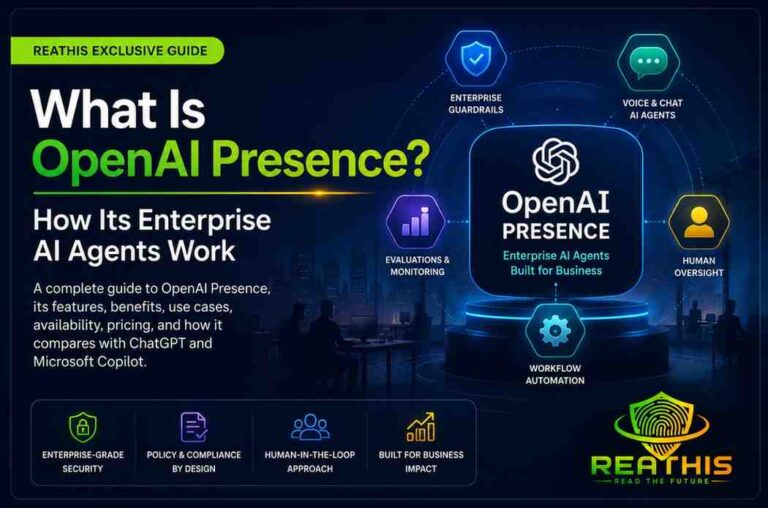
This guide explains what OpenAI Presence is, why OpenAI launched it, how its enterprise AI agents work, who can use the platform, its key features, security safeguards, current availability, pricing status, and how it compares with ChatGPT and Microsoft Copilot.
- Launch: July 22, 2026
- Developer: OpenAI
- Available For: Eligible enterprise organizations through Limited General Availability (GA)
- Purpose: Deploy trusted voice and chat AI agents for customer support and internal business workflows.
- Supports: Enterprise knowledge integration, approved business actions, workflow automation, voice AI, and chat AI.
- Key Features: AI guardrails, human approval workflows, simulations, evaluations, continuous monitoring, and enterprise governance.
- Pricing: OpenAI has not announced public pricing or a self-service version.
- Comparison: Learn how OpenAI Presence differs from ChatGPT and Microsoft Copilot.
- ReaThis Analysis: We separate OpenAI’s verified claims from unanswered questions to help businesses evaluate the platform with greater confidence.
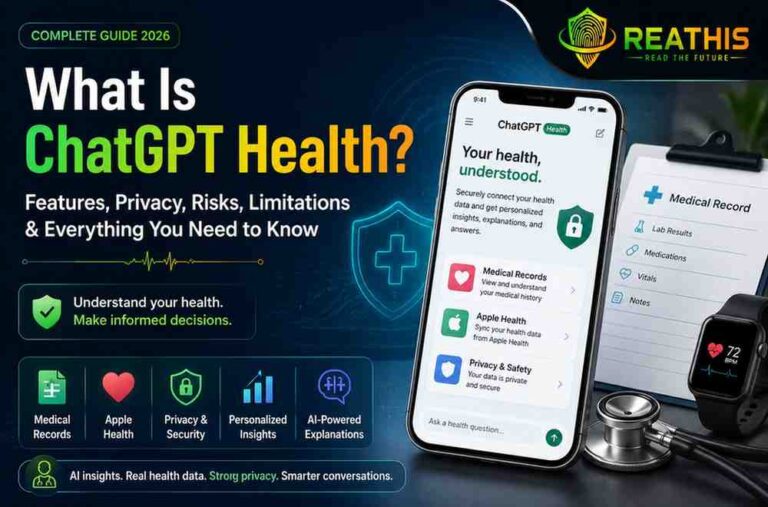
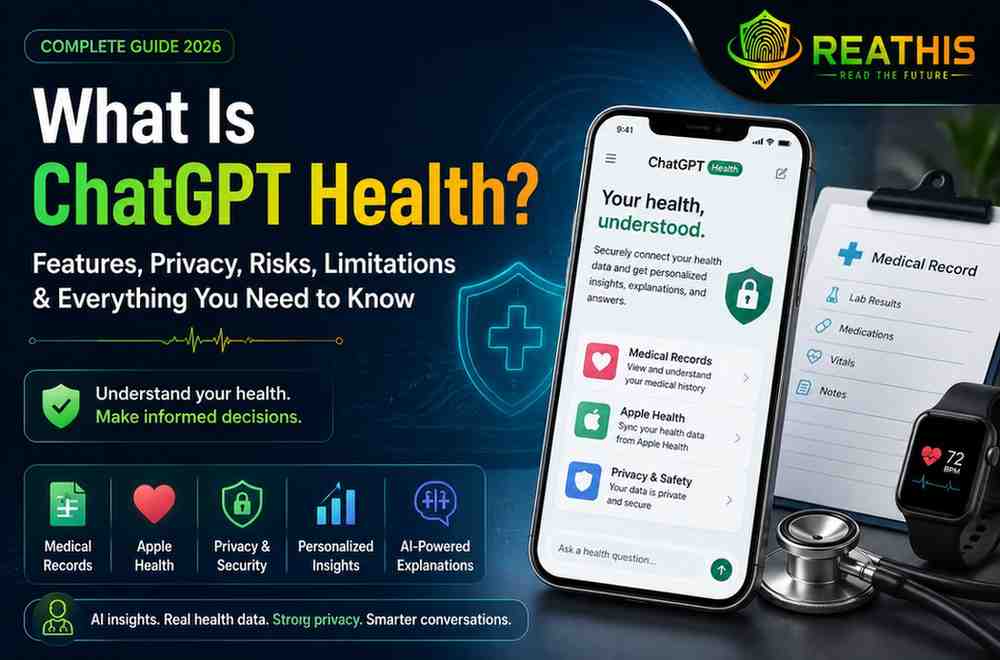
OpenAI designed ChatGPT Health as a dedicated AI-powered health experience to help people better understand and manage their personal health information. The company introduced the feature in January 2026 and expanded it to eligible U.S. users on July 23, 2026, after observing that health and wellness had become one of the most common reasons people use ChatGPT. It allows users aged 18 and older to securely connect Apple Health, supported medical records, and wellness apps such as Function Health and MyFitnessPal, enabling ChatGPT to explain lab reports, summarize doctor notes, identify health trends, compare test results, and provide personalized health insights based on the user’s own data. OpenAI designed ChatGPT Health to support—not replace—professional medical care. The company also protects users with additional privacy safeguards and does not use connected health data to train its foundation AI models or for advertising purposes.
In this guide, you’ll learn what ChatGPT Health is, why OpenAI launched it, who can access it, how it works, what medical records and Apple Health data it can connect, its privacy and security protections, whether it can diagnose medical conditions, how to disconnect or delete your health information, and the key benefits and limitations every user should know before connecting sensitive medical data.
Key Takeaways
- OpenAI launched ChatGPT Health for eligible U.S. adults on July 23, 2026.
- ChatGPT Health connects with Apple Health, supported U.S. medical-record providers, One Medical, and Function Health.
- OpenAI does not use connected Health information to train its foundation AI models.
- OpenAI does not use Health data for advertising purposes.
- Users can disconnect connected Health accounts at any time, and OpenAI removes synced Health data from its systems within 30 days. Users must delete conversation history separately if they want to remove past chats.
- ChatGPT Health helps users understand, organize, and manage their health information, but it does not diagnose diseases or replace qualified healthcare professionals.
- OpenAI offers ChatGPT Health for consumers and ChatGPT for Healthcare for organizations. Unlike the consumer version, ChatGPT for Healthcare supports HIPAA-compliant use with enterprise controls and Business Associate Agreements (BAAs).
Review Methodology
This article is based on:
- OpenAI’s official announcement introducing Health in ChatGPT
- OpenAI’s published privacy and security statements
- Public documentation regarding Apple Health integration
- Independent editorial analysis by ReaThis
Throughout this guide, verified facts are clearly distinguished from editorial observations. When OpenAI has not publicly answered a question, we explicitly identify that uncertainty rather than speculate.
What Is ChatGPT Health?
ChatGPT Health is a specialized health experience built into ChatGPT that enables users to securely connect supported healthcare information directly to their conversations. Instead of repeatedly uploading PDFs, screenshots, or medical reports, users can authorize ChatGPT to access connected health information so it can provide explanations using their own data as context.
The goal is straightforward: make personal health information easier to understand.
For many people, laboratory reports contain unfamiliar abbreviations, physician notes use technical terminology, and medication lists can become difficult to manage over time. ChatGPT Health attempts to bridge that gap by translating complex medical language into plain English while keeping the original medical information available for reference.
Importantly, OpenAI does not describe ChatGPT Health as an AI doctor. Instead, the company positions it as an educational assistant that helps users organize information, understand records, and prepare for conversations with healthcare professionals.
Why Did OpenAI Launch ChatGPT Health?
According to OpenAI, health-related conversations are already among the most common uses of ChatGPT. Millions of users ask questions about symptoms, medications, laboratory tests, nutrition, exercise, and wellness every week. Earlier versions of ChatGPT relied mainly on manually uploaded files or typed descriptions. The new Health experience aims to streamline that process by allowing supported health data to be connected directly—with user permission—so responses can be more personalized and context-aware.
This launch also reflects a broader shift in consumer AI. Rather than functioning solely as a chatbot, AI assistants are increasingly becoming personal information hubs that integrate calendars, documents, productivity tools, and now, health records. That convenience, however, also raises new questions about privacy, security, and responsible use—topics we will examine later in this series.
Who Can Access ChatGPT Health?
At launch, ChatGPT Health is not available worldwide.
OpenAI has confirmed that the rollout currently targets:
| Requirement | Current Availability |
|---|---|
| Age | 18 years or older |
| Country | United States |
| Account | Logged-in ChatGPT users |
| Platforms | Web and iOS |
| Plans | Free, Go, Plus, and Pro |
The rollout began on July 23, 2026, and OpenAI describes it as a phased release, meaning eligible users may receive access gradually rather than all at once.
Is It Available Internationally?
Not yet.
As of publication, OpenAI has not announced a general global rollout schedule. Reports indicate the feature is currently unavailable in several international regions, including parts of Europe, while OpenAI continues expanding access.
For readers outside the United States, that means you’ll likely need to wait until OpenAI confirms support in your country.
What Health Information Can ChatGPT Connect?
One of the biggest differences between ChatGPT Health and traditional AI conversations is that it can work with connected health information rather than relying entirely on manually uploaded files.
OpenAI currently highlights two major categories of connected data.
1. Supported Medical Records
Users can connect compatible medical records from supported healthcare providers. Depending on the provider and available records, this may include information such as:
- Laboratory test results
- Diagnoses
- Medication lists
- Allergies
- Vaccination history
- Clinical notes
- Visit summaries
- Medical history
Instead of searching through multiple patient portals, users can ask natural-language questions like:
- “What changed between these two blood tests?”
- “Can you explain my cholesterol results?”
- “What medications am I currently taking?”
- “Summarize my last doctor’s visit.”
The exact records available depend on the healthcare provider and supported integrations. OpenAI has not stated that every hospital or healthcare system is compatible.
2. Apple Health Information
ChatGPT Health also supports integration with Apple Health, allowing users to incorporate selected wellness information into conversations.
Depending on the information stored in Apple Health, connected data may include:
- Daily step counts
- Heart rate
- Sleep duration
- Activity levels
- Weight
- Walking distance
- Other health metrics available through Apple Health
This enables more personalized questions, such as:
- “Has my average sleep improved this month?”
- “Why has my resting heart rate changed recently?”
- “Summarize my activity trends.”
Rather than replacing Apple’s own Health app, ChatGPT acts as an interpreter that explains patterns and answers questions in conversational language.
What ChatGPT Health Is Designed to Do
Based on OpenAI’s official documentation, ChatGPT Health is intended to help users:
- Understand medical terminology.
- Explain laboratory reports.
- Summarize clinical notes.
- Organize medical information.
- Prepare questions before appointments.
- Identify trends in connected health data.
- Make health information easier to understand.
These capabilities are educational and organizational in nature. They can reduce confusion around complex medical information, but they are not presented as substitutes for professional diagnosis or treatment.
First Impressions: Why This Launch Matters
The launch of ChatGPT Health marks one of OpenAI’s most significant moves beyond general-purpose AI. Instead of asking users to paste sensitive medical documents into chats, OpenAI lets them connect their health information directly through a dedicated Health experience with additional privacy protections and built-in safeguards.
For consumers, the appeal is obvious: faster access to understandable explanations of complex health information. For the healthcare industry, however, the questions extend beyond convenience. How is sensitive medical data protected? Can users fully control what they share? And where should AI assistance end while professional medical judgment begins?
Those questions are where the real story starts.
How Does ChatGPT Health Work?
One of the biggest misconceptions about ChatGPT Health is that it constantly monitors your medical information or automatically reads everything stored in your health apps. That isn’t how the system is designed.
Instead, ChatGPT Health follows a permission-based connection model. You decide whether to connect a supported health source, which information ChatGPT can access, and when it may use that information during a conversation. OpenAI states that, by default, ChatGPT asks for permission before using connected health information to personalize a response. Users can approve each request individually or enable the “Always Allow” setting. They can change this preference at any time in Settings.
This approach gives users greater control because OpenAI manages connected health data through dedicated Health settings instead of individual conversations.
How the Health Workflow Actually Works
At a high level, ChatGPT Health follows a simple workflow.
Medical Records / Apple Health
             │
             ▼
     User Grants Permission
             │
             ▼
      Health Connection Created
             │
             ▼
  ChatGPT Requests Access (Default)
             │
             ▼
   User Approves (or Always Allow)
             │
             ▼
Personalized Health Conversation
Unlike traditional health portals, ChatGPT is designed to answer questions in natural language. Instead of searching through multiple reports yourself, you can ask questions such as:
- “What changed since my last blood test?”
- “Summarize my latest doctor’s visit.”
- “Which cholesterol numbers improved?”
- “Explain this diagnosis in simple language.”
Rather than replacing your healthcare provider’s patient portal, ChatGPT acts as an AI interpreter that helps explain information already available to you.
Connecting Medical Records
OpenAI currently supports connections with selected U.S. healthcare systems and health services. According to the company’s documentation, supported sources include participating hospital systems, One Medical, and Function Health, with additional integrations expected over time.
Depending on your healthcare provider, ChatGPT may be able to access information such as:
| Supported Information | Possible Use in ChatGPT |
|---|---|
| Lab results | Explain values and trends |
| Diagnoses | Translate medical terminology |
| Medications | Summarize current prescriptions |
| Allergies | Answer medication-related questions |
| Visit summaries | Explain physician notes |
| Vaccination history | Organize immunization records |
| Clinical notes | Simplify technical language |
It’s important to note that availability depends on whether your healthcare provider participates in the supported integrations. OpenAI has not claimed universal compatibility with every hospital, clinic, or electronic health record system in the United States.
Apple Health Integration Explained
The second major component of ChatGPT Health is its integration with Apple Health.
Apple Health already collects wellness information from the iPhone, Apple Watch, and compatible health apps. Instead of replacing the Apple Health app, ChatGPT analyzes information that users choose to share and answers questions in conversational language.
Depending on the data available in Apple Health, ChatGPT may help interpret:
- Daily step counts
- Heart rate
- Resting heart rate
- Walking distance
- Sleep duration
- Exercise activity
- Weight trends
- Other metrics synced through Apple Health
For example, instead of manually comparing graphs across several weeks, you could ask:
“Have I been sleeping less over the past month?”
Or:
“Did my activity decrease after my last doctor’s appointment?”
ChatGPT can identify trends and explain patterns, but it does not replace the original Apple Health application or modify its records.
Can ChatGPT Change My Health Records?
No.
One important safeguard that OpenAI has confirmed is that ChatGPT operates in read-only mode for connected health information.
That means ChatGPT can:
- Read connected medical information
- Explain reports
- Compare historical records
- Summarize changes
- Answer questions
It cannot:
- Edit medical records
- Add diagnoses
- Update Apple Health
- Change prescriptions
- Modify hospital information
Any changes to your official medical record must still be made by your healthcare provider or through the original health application.
This distinction is significant because it reduces the risk of AI accidentally altering official healthcare data.
How Permissions Work
A common concern is whether ChatGPT continuously accesses health information in the background.
According to OpenAI, the answer is no by default.
When Health is first connected:
- You choose which accounts to connect.
- ChatGPT requests permission before using connected health information in a conversation.
- You can approve each request individually.
- If you prefer, you can enable “Always Allow,” removing repeated permission prompts.
- This setting can be changed at any time in Health settings.
This design allows users to decide when their health information becomes part of a conversation instead of making every chat automatically health-aware.
Memory and Health Conversations
One area that deserves careful attention is the relationship between Memory and Health.
OpenAI makes an important distinction:
- Connected medical records are not automatically turned into ChatGPT memories.
- However, memories can be created from Health conversations if the Memory feature is enabled.
- Users who prefer not to create memories from these conversations can disable Memory or use Temporary Chat, which avoids creating lasting memories for that session.
For privacy-conscious users, this means there are separate controls for:
- Connected health data
- Chat history
- Memory
- Temporary Chat
Understanding the difference between these features is important because they serve different purposes and are managed independently.
The Privacy Architecture Behind ChatGPT Health
Because health information is among the most sensitive categories of personal data, OpenAI says it has added additional protections beyond the standard ChatGPT experience.
According to OpenAI’s official documentation, the company:
- Encrypts all ChatGPT conversations both in transit and at rest.
- Applies additional encryption protections to connected medical records and Apple Health information.
- Allows users to control which health accounts they connect.
- Lets users decide when ChatGPT can use connected health information in conversations.
- Does not use Health conversations or connected health data to train its foundation AI models.
These commitments address some of the biggest privacy concerns people have when considering whether to connect sensitive medical information to an AI assistant.
ReaThis Analysis: Convenience Comes With New Responsibilities
The most notable aspect of ChatGPT Health isn’t simply that it connects medical records—it’s that it changes how people interact with them.
Traditionally, patients logged into separate hospital portals, downloaded PDFs, searched through test results, and tried to interpret unfamiliar medical terminology on their own. ChatGPT introduces a conversational layer that can summarize, compare, and explain information in seconds.
That convenience is valuable, but it also changes the trust relationship. Instead of trusting only a healthcare provider and patient portal, users are introducing an AI system into the workflow. OpenAI has responded by adding permission controls, encryption, and explicit commitments not to use connected health data for model training or advertising. Those safeguards are meaningful, but they do not eliminate the need for users to think carefully about what they connect, how they manage memories, and when AI explanations should be verified with a qualified healthcare professional.
The Biggest Question: Does OpenAI Use Your Health Data to Train ChatGPT?
When OpenAI announced ChatGPT Health, the first question many people asked wasn’t about Apple Health or medical records—it was about training data.
If you’re connecting lab reports, prescriptions, diagnoses, and physician notes, it’s reasonable to wonder whether that sensitive information will eventually become part of future AI models.
Fortunately, OpenAI has provided a clear answer.
According to OpenAI’s official Health documentation, OpenAI does not use connected health information or Health conversations to train its foundation AI models. The company also states that it does not use this information for advertising purposes.
That represents one of the strongest privacy commitments OpenAI has made for any consumer-facing feature to date.
What Exactly Does OpenAI Say?
OpenAI’s documentation makes several specific commitments regarding Health in ChatGPT.
OpenAI states that it:
- Protects Health data with additional encryption safeguards.
- Does not use Health data to train its foundation AI models.
- Does not use Health data for advertising purposes.
- Gives users full control over their Health data through Health settings.
- Allows users to disconnect their connected Health accounts at any time.
- Requests user permission by default before using connected Health information in conversations.
These commitments apply specifically to the Health experience rather than general ChatGPT conversations. That distinction matters because users often confuse ordinary chat history with connected Health data.
Does That Mean OpenAI Never Sees My Information?
Not exactly.
One of the biggest misunderstandings surrounding AI privacy is the belief that “not used for training” means “nobody can ever access it.”
Those are two different questions.
OpenAI’s public documentation specifically addresses model training, but that should not be interpreted as meaning the data never exists within OpenAI’s systems or that it can never be processed to provide the service.
Like any cloud-based platform, information must be processed so ChatGPT can answer your questions.
The important distinction is this:
| Activity | OpenAI’s Position |
|---|---|
| Process data to answer questions | Yes |
| Use Health conversations to train foundation models | No |
| Use Health data for advertising | No |
| User permission required | Yes (default behavior) |
For most users, this is a meaningful difference. Your health information may be processed to generate responses, but OpenAI says it is not added to the datasets used to improve future foundation models.
Can ChatGPT Diagnose Medical Conditions?
The short answer is:
No.
Although ChatGPT Health can explain medical information using your records as context, OpenAI does not position it as a diagnostic system.
Instead, the company describes it as a tool that helps users:
- understand reports,
- summarize records,
- prepare questions,
- interpret medical terminology,
- organize health information.
It is not intended to replace physicians, diagnose diseases, prescribe medication, or provide emergency care.
What ChatGPT Can Do
When connected to your health information, ChatGPT may be helpful for tasks such as:
Explaining blood test results
Instead of searching dozens of unfamiliar abbreviations online, users can ask:
“Can you explain what HDL and LDL mean?”
Summarizing medical history
Long physician notes can be condensed into plain language.
Comparing reports
Users can ask what changed between two laboratory tests or appointments.
Preparing for appointments
Before visiting a doctor, users can organize questions based on previous medical records.
Understanding medications
ChatGPT can explain why a medication may have been prescribed and what it is commonly used for, while reminding users to verify advice with licensed healthcare professionals.
These are educational tasks rather than clinical decision-making.
What ChatGPT Cannot Do
Equally important are the things ChatGPT Health should never replace.
It cannot:
- Diagnose diseases with certainty.
- Replace a licensed physician.
- Prescribe medication.
- Interpret every laboratory result correctly in every clinical context.
- Replace emergency services.
- Guarantee medical accuracy.
Medical diagnosis depends on far more than laboratory values or historical records. Physicians combine imaging, physical examinations, symptoms, patient history, family history, medications, and clinical judgment.
No consumer AI system currently has access to that complete picture.
Why OpenAI Still Recommends Seeing a Doctor
Even though OpenAI believes GPT-5.6 has improved health reasoning capabilities, the company repeatedly emphasizes that ChatGPT should support—not replace—professional medical care.
That recommendation isn’t just legal caution.
Healthcare is full of situations where context matters.
The same laboratory result can indicate very different conditions depending on:
- age,
- pregnancy,
- existing illnesses,
- medications,
- recent surgery,
- family history,
- symptoms,
- physical examination.
An AI assistant may explain numbers accurately while still lacking critical context needed for diagnosis.
The Privacy Risks Users Should Still Understand
OpenAI’s privacy commitments are significant, but no digital platform can eliminate every risk.
Connecting sensitive health information introduces responsibilities that users should understand before enabling any integration.
1. Human Overreliance
Perhaps the biggest risk isn’t technical.
It’s psychological.
If users begin trusting AI explanations more than healthcare professionals, they may delay seeking appropriate medical care.
That concern has become increasingly visible following several lawsuits alleging harmful reliance on chatbot-generated medical guidance. Those cases remain allegations, and OpenAI has reiterated that ChatGPT is not a substitute for professional medical care.
2. Incomplete Medical Context
AI only knows what it can access.
If:
- records are missing,
- providers aren’t connected,
- medications are outdated,
- recent diagnoses haven’t been uploaded,
its explanations may also be incomplete.
That doesn’t necessarily mean the explanation is wrong—it means it may be based on incomplete information.
3. Shared Devices
Many people leave ChatGPT logged in on:
- family iPads,
- shared computers,
- workplace devices.
If someone else accesses your account, they could potentially view health conversations just like any other chat history.
Strong passwords, device security, and account protection remain essential.
4. Screenshots and Sharing
Privacy controls only protect data inside the platform.
Once users:
- export conversations,
- take screenshots,
- forward chats,
- copy responses,
they become responsible for how that information is stored and shared.
This is a user-controlled risk rather than a platform vulnerability.
5. AI Can Still Make Mistakes
Large language models have improved dramatically, but they are not infallible.
Medical explanations can still contain:
- omissions,
- misunderstandings,
- incorrect assumptions,
- oversimplifications.
That is why OpenAI continues recommending human medical oversight for diagnosis and treatment decisions.
ReaThis Investigation: Verified Safeguards vs. Questions That Still Remain
One area where many launch articles stop is simply repeating OpenAI’s announcements.
At ReaThis, we wanted to separate what has been officially confirmed from what has not yet been fully answered.
| Verified by OpenAI | Still Unanswered Publicly |
|---|---|
| Health conversations are not used to train foundation AI models. | Will additional international healthcare systems be supported? |
| Health data is not used for advertising. | What is the long-term expansion roadmap beyond current partners? |
| Additional encryption protections are applied. | Will more wearable ecosystems be supported beyond Apple Health? |
| Users control connected accounts. | How quickly will future healthcare integrations roll out? |
| Users can disconnect health connections. | Will provider support vary significantly across regions? |
| Permission is requested by default before using connected health information. | What additional health features are planned beyond the current launch? |
This distinction is important because transparency builds trust. Rather than filling gaps with speculation, it’s better to acknowledge where public documentation is still evolving.
ReaThis Take
From a privacy perspective, ChatGPT Health launches with stronger safeguards than many observers expected. OpenAI has made explicit commitments around training, advertising, encryption, and user control—areas that have historically generated the most concern around AI assistants.
However, privacy protections are only one part of responsible AI use. Users still need to exercise judgment about when to rely on AI explanations and when to seek professional medical advice. The technology is best viewed as a tool for understanding information, not making final healthcare decisions.
That distinction may ultimately determine whether ChatGPT Health becomes one of the most trusted consumer AI features—or one of the most misunderstood.
Can You Disconnect ChatGPT Health?
Yes. One of the most important privacy protections in ChatGPT Health is that users remain in control of connected accounts. OpenAI allows you to disconnect medical records and Apple Health whenever you choose instead of requiring a permanent connection.
However, disconnecting an account and deleting all related information are not exactly the same thing. Understanding that difference helps avoid confusion.
How to Disconnect Medical Records
If you’ve connected a hospital, healthcare provider, or another supported medical records source, OpenAI provides a straightforward removal process.
Steps
- Open Health in ChatGPT.
- Select the Accounts tab.
- Find the connected provider.
- Click the ⋯ (More) menu.
- Select Remove Account.
After disconnecting, the account disappears from your Health connections. OpenAI says that data synchronized from that source is deleted from its systems within 30 days.
How to Disconnect Apple Health
Removing Apple Health follows a slightly different process.
Steps
- Open Health.
- Click the ⋯ menu in the upper-right corner.
- Select Apple Health.
- Choose Disconnect.
Once disconnected, ChatGPT can no longer use Apple Health information to personalize responses. OpenAI states that it removes synced Apple Health data from its systems within 30 days after users disconnect their Apple Health account.
What Happens After You Disconnect?
Many users assume disconnecting instantly erases everything.
That’s only partially true.
OpenAI distinguishes between three different types of information:
| Information | What Happens After Disconnecting? |
|---|---|
| Connected medical records | Deleted from OpenAI systems within 30 days |
| Apple Health data | Deleted from OpenAI systems within 30 days |
| Existing chat conversations | Remain until you delete them yourself |
| Memories created from conversations | Managed separately through Memory settings |
This is an important distinction because disconnecting prevents future syncing, but it does not automatically erase information that has already appeared inside previous conversations.
How to Delete Health Conversations
Deleting connected data and deleting conversations are separate actions. If you’ve discussed your medical information in ChatGPT, those chats remain in your history unless you remove them.
To delete a Health conversation:
- Open Chat History (or the Health chat list, depending on the interface).
- Select the conversation.
- Choose Delete.
- Confirm deletion.
According to OpenAI, deleting a conversation removes that chat, but it does not automatically disconnect Apple Health or other connected providers. Those connections must be managed separately through Health settings.
What About ChatGPT Memory?
Memory is one of the most misunderstood features in ChatGPT Health.
OpenAI explains that:
- Connected medical records do not automatically become saved memories.
- Health conversations can create memories if the Memory feature is enabled.
- Users can disable Memory or use Temporary Chat if they do not want conversations to influence future interactions.
- Health-related memories can be reviewed and deleted separately.
This separation gives users greater control over how long health-related context is retained.
When Should You Use Temporary Chat?
Temporary Chat is a useful option when discussing particularly sensitive topics.
OpenAI recommends it for conversations that you do not want contributing to future personalization. When using Temporary Chat:
- No new memories are created.
- The conversation is isolated from ongoing personalization.
- Connected Health data can still be used (with permission), but the session itself does not build long-term memory.
For highly personal medical discussions, Temporary Chat may be the preferred choice.
Who Should Avoid Using ChatGPT Health?
Although ChatGPT Health can make medical information easier to understand, it is not appropriate for every situation.
1. People Experiencing Medical Emergencies
If you are experiencing symptoms such as severe chest pain, difficulty breathing, heavy bleeding, stroke symptoms, or another medical emergency, ChatGPT should never replace emergency medical services.
OpenAI explicitly states that Health is not intended for diagnosis or emergency treatment.
2. Users Seeking a Definitive Diagnosis
AI can explain a laboratory report.
It cannot determine, with certainty, why a result is abnormal or make a final diagnosis.
Clinical evaluation still requires qualified healthcare professionals.
3. People Uncomfortable Sharing Sensitive Information
Even with additional encryption and privacy controls, some users simply prefer not to store sensitive medical information in cloud-based AI services.
That is a personal decision, and there is no requirement to connect Health in order to use ChatGPT.
4. Parents Managing Children’s Medical Information
At launch, Health is available only to eligible users aged 18 years or older in the United States. OpenAI has not announced consumer support for children’s accounts through this feature.
5. Healthcare Professionals Handling Patient Records
OpenAI also notes that Health in ChatGPT is not HIPAA-eligible for clinical or covered-entity use. Organizations that require HIPAA support are directed toward OpenAI’s dedicated healthcare offerings rather than the consumer Health feature.
Common Mistakes Users Should Avoid
Even with strong privacy controls, mistakes often come from how people use technology rather than the technology itself.
Assuming AI Is Always Correct
ChatGPT may simplify complex medical information, but simplified explanations are not guaranteed to be complete or clinically accurate.
Always verify important decisions with qualified healthcare professionals.
Forgetting That Conversations Remain
Disconnecting Health does not erase previous conversations.
If sensitive information has already been discussed, those conversations should also be deleted if you no longer want them stored.
Leaving Memory Enabled Without Understanding It
Many users enable Memory without realizing that future conversations may be personalized based on previous discussions.
Review your Memory settings before discussing long-term medical issues.
Staying Logged Into Shared Devices
Family tablets, workplace computers, or shared laptops may expose sensitive conversations if left signed in.
Always log out of devices you do not exclusively control.
Using AI Instead of a Doctor
Perhaps the most serious mistake is treating ChatGPT as a replacement for professional medical advice.
OpenAI repeatedly emphasizes that Health is designed to support, not replace, healthcare providers.
Realistic Use Cases
When used appropriately, ChatGPT Health can be genuinely helpful.
Example 1: Understanding Blood Test Results
A patient receives laboratory results containing unfamiliar abbreviations.
Instead of searching each value separately, they ask ChatGPT to explain what each marker generally measures before discussing the results with their physician.
Example 2: Preparing for a Specialist Appointment
Someone with several recent appointments asks ChatGPT to summarize:
- medication changes,
- recent diagnoses,
- laboratory trends,
- questions worth asking their specialist.
The final medical decisions still come from the physician, but the patient arrives better prepared.
Example 3: Identifying Lifestyle Trends
Using Apple Health information, a user notices declining sleep duration.
ChatGPT summarizes recent sleep and activity patterns, helping the user recognize changes before discussing them with a healthcare professional.
These are examples of AI supporting health literacy rather than replacing clinical care.
ReaThis Editorial Evaluation
After reviewing OpenAI’s official documentation and launch materials, ChatGPT Health stands out because it addresses many of the privacy concerns that have historically limited trust in consumer AI. The company has introduced permission-based access, additional encryption for connected health information, and explicit commitments that connected Health data is not used to train foundation models or for advertising. It also provides users with the ability to disconnect accounts and remove synced data within a defined timeframe.
At the same time, these safeguards do not eliminate every concern. Users are still responsible for managing conversation history, Memory settings, and account security. AI explanations can simplify complex medical information, but they cannot replace clinical judgment or emergency care.
ReaThis Scorecard
| Category | Assessment |
|---|---|
| Ease of Use | ★★★★★ |
| Privacy Controls | ★★★★☆ |
| Transparency | ★★★★★ |
| User Control | ★★★★★ |
| Educational Value | ★★★★★ |
| Diagnostic Capability | Not intended for diagnosis |
| Emergency Suitability | Not suitable |
| Overall Recommendation | Strong educational tool when paired with professional medical care |
Our conclusion is that ChatGPT Health is most valuable when viewed as a health information assistant rather than an AI doctor. Used within those boundaries, it has the potential to improve health literacy, reduce confusion around medical records, and help patients have more informed conversations with their healthcare providers.
Frequently Asked Questions (FAQs)
Yes. OpenAI says Health in ChatGPT is available to eligible logged-in users across Free, Go, Plus, and Pro plans in the United States. Availability is being rolled out gradually, so some eligible users may not see the feature immediately.
Not currently. As of July 2026, OpenAI has launched Health in ChatGPT only for eligible users in the United States who are 18 years or older. The company has not announced a timeline for broader international availability.
No. OpenAI designed Health in ChatGPT to support—not replace—professional medical care. The feature helps users understand health information, organize medical records, and prepare for healthcare appointments, but it does not replace the expertise or judgment of qualified healthcare professionals.
Many people misunderstand this topic. OpenAI states that Health in ChatGPT is not a HIPAA-covered healthcare service for individual consumers and does not intend the feature for clinical or covered-entity use. The company also does not offer a Business Associate Agreement (BAA) for the consumer version of ChatGPT Health.
For healthcare organizations, OpenAI provides a separate product called ChatGPT for Healthcare. It specifically designs this enterprise offering to support HIPAA-compliant use, enterprise security controls, and the availability of a Business Associate Agreement (BAA).
Final Verdict
Health in ChatGPT is one of OpenAI’s most significant consumer product launches because it moves AI beyond answering generic health questions and into helping users understand their own medical information.
Instead of repeatedly uploading laboratory reports or copying physician notes into a conversation, eligible users can securely connect supported medical records and Apple Health information to receive explanations grounded in their personal health data. For many people, that could make complex medical information more accessible and easier to discuss with healthcare professionals.
What stands out most is OpenAI’s emphasis on user control. The company has introduced permission prompts before Health data is used, allows users to disconnect accounts, states that connected Health information is not used to train foundation models, and says it is not used for advertising. These commitments address several of the privacy concerns that have long surrounded AI-powered health tools.
At the same time, responsible use remains essential.
Health in ChatGPT is not a licensed clinician, a diagnostic system, or an emergency service. AI can summarize records, explain terminology, and identify trends, but it cannot replace the clinical judgment that comes from physical examinations, medical history, imaging, laboratory interpretation, and professional expertise.
The technology is most valuable when used as an educational companion rather than a medical decision-maker.
For users who understand those boundaries, ChatGPT Health has the potential to improve health literacy, reduce confusion around medical records, and help patients have more informed conversations with their healthcare providers.
ReaThis Editorial Disclosure
This article was independently researched and written by ReaThis using official OpenAI announcements, OpenAI Help Center documentation, and publicly available product information. Our editorial team distinguishes verified facts from analysis and avoids speculation where official documentation is incomplete.
Health-related technology evolves rapidly. Features, supported providers, privacy controls, regional availability, and product policies may change after publication. Readers should review OpenAI’s latest documentation before connecting sensitive health information and consult qualified healthcare professionals for diagnosis, treatment, or emergency medical decisions.
ReaThis does not provide medical advice. The information in this article is intended solely for educational and informational purposes.
Sources
- OpenAI — Launching Health in ChatGPT
- OpenAI Help Center — Health in ChatGPT
- OpenAI Help Center — What is ChatGPT Health?
- OpenAI Help Center — ChatGPT for Healthcare
About The Author